Search This Blog

Wednesday, November 18, 2015

What is art anyway?

Lewis concludes in Chapter 1 of Mere Christianity (1952) with two points, "First, that human beings,all over the earth, have this curious idea that they ought to behave in a certain way, and cannot really get rid of it.  Secondly, that they do not in fact behave in that way.  They know the Law of Nature; they break it.  These two facts are the foundation of all clear thinking about ourselves and the universe we live in (Lewis, 1952, p.8).
 
Having read that, I start to try and understand what this means to me and my work.  From reading this, it seems as if there is a moral standard/code that we as human beings adhere to - I agree with Lewis.  With that, how does this standard apply to and translate to art?  Is there a standard that we are trying to achieve in making art?  I hear a lot of talk these days about how art can be anything we want.  Is this because there was/is a standard but in our human nature have decided to break the Law of Nature?  Is art supposed to break rules or point to a standard? It is the intent of the artist that matters; which to some extent, I agree.  However, I start to wonder what is art then?  I am interested in having these conversations. We are all getting a Master of Fine Arts degree, but we never talk about this in a real way.  We all just say we make art, but why?  If what Lewis is saying is true, it seems as if there must be some rules about art that we strive to adhere to as well.  However, as he said, it is our choice to adhere to them or not.  If art is a depiction of our values, worldview, etc. what are we communicating?
 
I am thinking about these topics in what I do.  I strive for my work to adhere to a standard and depict my values and worldview, but how are those things being communicated?  I am asking myself, am I being successful?  I think art should lead viewers to consider something greater than themselves and maybe question their current view of the topic being addressed by the artist.  This is all for a purpose so that we can grow, work together, and come closer to understanding truth in this world.  I do not believe it is relative.
 
Lewis, C.S. (1952). Mere Christianity. New York, NY:  HarperCollins Publishers.
 
I will close with a quote from artist Mako Fujimura that I have been thinking about,
 
"We are today, border-less in more ways than one.  As we have become multi-cultural, we have become "multi-phrenic." There is no true, lasting expression of the sublime in a center-less world.  If there is no center, there is no periphery border in which art can thrive.  Today we need a centralizing vision of our being" (Fujimura, 2007, p.5).
 
This is an interesting concept - one that I am trying to wrap my mind around.  If there is no center, there are no boarders?  Webster defines border as "a boundary between places" or "an outer part or edge."  With that I ask the question, do we need borders in art?  If we do need borders - why?  If borders are defined by the center, what is the center?  If one says that borders are not necessary, does that mean that a center is not necessary?
 
Fujimura, Makoto (2007). River Grace. New York: Poiema Press: International Arts Movement. 
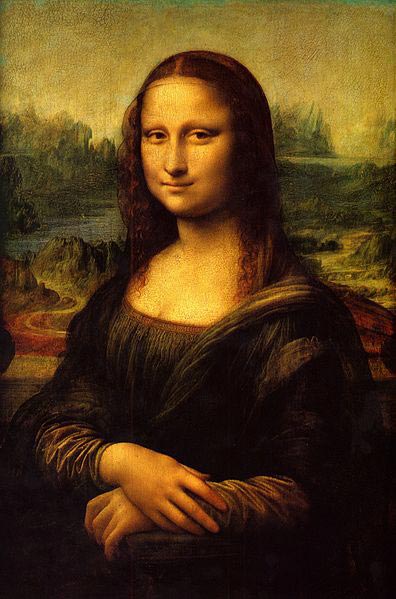
 
Mona Lisa by Leonardo da Vinci (1503-1517)


Monday, November 16, 2015

Bye and Bye

There’s a land that is fairer than day,
And by faith we can see it afar;
For the Father waits over the way
To prepare us a dwelling place there.
 
Refrain:
In the sweet bye and bye,
We shall meet on that beautiful shore;
In the sweet bye and bye,
We shall meet on that beautiful shore.
 
 38” x 5” x 22” - Tree Nymph butterfly specimen courtesy of the Florida Museum of Natural History, 23K gold leaf, balsa wood veneer on birch panel, stainless steel pins, brass screws, encased in UV filtering acrylic vitrine fabricated by Faulkner Plastics of Miami, FL
 
Commissioned by Mrs. Linda Fuchs 
Dasburg President's House at the University of Florida
 
The title, Bye and Bye is inspired by the cherished hymn, “In the Sweet Bye and Bye”
Excerpt from In the Sweet Bye and Bye by Sanford F. Bennett (1868)

Sunday, October 25, 2015

In the beginning...

I began making ceramic eggs last spring as metaphors for the concept of home.  Reflecting on my thoughts have led me to realize that maybe I am thinking about the egg as a metaphor for home in relation to its role of raising children.  Home is fragile and precious.  Like the egg, it is also the container of life and the beginning of all things.  This is the role of the home in our culture and society.  It begins a child’s life and prepares them for the world they will face.  Childhood is also precious and a very fragile time.  It is critical to nurture and protect it.  It affects the way children learn to move and interact with people in this world even into adulthood.  If this development is altered, trauma can happen.  Trauma can be overcome - the trials we face make us who we are.  The good news is that there is always hope for intervention if we humble ourselves and allow it to happen.


Monday, October 19, 2015

"Mom, where do babies come from?"

In reading some from, Children & Adolescents: Interpretative Essays on Jean Piaget, author David Elkind makes an interesting point about the development in children and their question asking.
 
"One of the earliest themes in a child's questioning has to do with origins.  The beginnings of things, particularly of living things, are a great mystery to children, just as they were to the Greek philosophers."
 
Elkind goes on to give examples of common questions that children begin to ask around the age of 5 or 6.  Questions like "How does the baby get in mommy's stomach?" or "Who was the mother when everybody was a baby?"
 
Parents should seek to answer these sort of questions in a way that is appropriate to the child's level of understanding. 
 
Elkind goes on to say, "If the parent feels uncomfortable about invoking God in answering such questions he can always ask the child what he thinks and the child is likely himself to supply the theological explanation."
 
Pretty cool.
 
 
"For since the creation of the world God's invisible qualities - his eternal power and divine nature - have been clearly seen, being understood from what has been made so that men are without excuse." Romans 1:20
 
 
Works Cited
 
Elkind, David. Children & Adolescents: Interpretive essays on Jean Piaget. New York: Oxford University Press, 1970.


Wednesday, October 14, 2015

"Leave it To Beaver!"

Leave it to Beaver! Starring: Barbara Billingsley, Hugh Beaumont, Tony Dow, and Jerry Mathers as the Beaver.
In a male commentator’s voice, these are the words that have echoed from television sets across America millions of times since this renowned sitcom’s first debut in October 1957.  Even if one has not heard or seen it himself, he knows of it.  It is familiar.  This sitcom painted the picture of what it looked like to live in 1950s American suburbia.  Almost 60 years later, its influence lives on in our country.  While some people are appalled by this picture of family and suburbia life screaming “women’s rights!” or “end male domination,” many people lust over this ideal.  For those who are attracted to the marriage and family of Ward and June Cleaver, what is it about their life that is so appealing?   Is there an innate desire to live this way or is it merely an image or façade painted by our culture – a social construct? 
 
We have almost been convinced that if we lived the way the Cleaver’s did, we would be safe and secure.  Warm in our suburban home, surrounded by our white picket fence that formed the perimeter around our plush freshly mowed lawn, setting down to the table to eat a homemade baked apple pie served to us by our mother in a pearl necklace, we would be safe.  Safe.  Yes – safe – for a moment.  A fleeting moment.  Yet, life happens and sometimes we are not given that apple pie. In fact, many of us aren’t.  Then, what do we do?  Give up? Hang up the towel?  No.  There is something greater.  We have never been promised comfort or security on this Earth.  That is not the point of this life.  This life is a journey and sometimes it is a difficult one.  This life is a journey to becoming something greater if we allow ourselves to become it.  One day, this life will end. Then and only then will we experience eternal glory, eternal security, and eternal comfort.  Ward and June Cleaver do not determine where I spend eternity.


“In this you greatly rejoice, though now for a little while you may have had to suffer grief in all kinds of trials.  These have come so that your faith – of greater worth than gold which perishes even though refined by fire – may be proved genuine and may result in praise, glory and honor when Jesus Christ is revealed.” 1 Peter 1:6-7 


Wednesday, October 7, 2015

This too shall pass....

Security, safety, purpose, and love. Humans are on a search to find these things. Whether they be physical, emotional, relational, or spiritual, we all want security.  In the country in which we live, America, there are many things that seem to provide us the opportunity to be secure -  physical homes, institutions, systems, organizations, and structures.  In comparison to other nations, America is rich.  However, how long will these man-made and imposed orders last?  They will not - they are merely attempts to achieve what is really to come.  At any moment, a disaster could bring it all crashing down and our perfect ideas of security will be no more.  No more white picket fences, perfectly manicured lawns, or even organizations that seek to help those in need.  Everything will pass.  What will we be left with?  I challenge you to consider if the world as you know it were to fall apart, what would you do?


Wisteria Lane from the set of Desperate Housewives
 
 
"So we fix our eyes not on what is seen, but what is unseen.  For what is seen is temporary, but what is unseen is eternal." 2 Corinthians 4:18
 

Wednesday, September 23, 2015

Standards: Recent thoughts about my work

In my art, I am searching for how to communicate my ideas on the value of the Christian faith and worldview in relationship to the idea of one’s personal security and how it is illustrated through the home and family.  I am seeking to illustrate value, purpose, standards, and truth within these topics, but also the redemption that is available when we fail.  I believe there is an ultimate security and standard to be found.  What does that look like? How can we attain it, then nurture and protect it?